.png)


How To Design An Ebook Cover In 2026 With No Experience and Without AI In 2026

A writer and designer’s guide to free and low cost book covers without resorting to using AI. At the end, find tips on hiring a full cost designer without getting scammed too!

You need an Ebook cover for your novel, possibly for Amazon KDP. You have no experience, and the only creative bone in your body is for writing. It’s what you’re good at!
Large portions of target audiences for fiction novels are increasingly rejecting content made with the assistance of generative AI, and you don’t want to be the last one to get the memo.
Authenticity is in, robots are out.
Not to mention, AI generated content is currently in an intellectual copyright ‘limbo’ that could become a hair pulling nightmare for you as time goes on.
In this blog post, I’ll walk you through how to get your own book cover, either for free, low cost, or how to find a reliable book cover designer that won’t scam you. I’ll go over how I got started making my own covers, what I did wrong, and point you in the right direction on how to get started.
Several years back, I wanted to make my own cover before artificial intelligence had its hand in things. I wasn’t the illustrator I am today, nor the designer.

So I started with an image from a free picture website, uploaded it to a visual program (Procreate in this case, but Canva, Photoshop, or Adobe would all have worked), made some edits to the photo, and slapped a basic Canva font on it.
Not terrible… for a first ever attempt. It is legible, one of the most important things.
With a close look, you can see the rasterization of the base image I used because not only did I take it straight from a low quality and blow it all the way up, I also put it through some vigorous ‘editing’ - that is, I was playing with Procreate’s filter settings until it became unrecognizable from its original form. Then I drew with the ‘fire’ brush and ‘light’ on top of it. Oh, and I didn’t even put the author title because I hadn’t decided my pen name.
If you’re wonder: Yes, I did actually use this cover for a while. .
Any reader will also spot how lackluster my text was, and how easily I was drawn to adding an unnecessary glow effect. The layout? Amatuer. Composition? What’s that? Even if you think the end result looks aesthetically pleasing (I won’t be offended if you don’t), I’m certain you wouldn’t expect it to be about a young elven runaway that ends up taking down her country’s government. Or aids and abets in that crime.
It looks more like a dark romance spice novel due to its high contrast — and while there is romance, nothing else fits.
Here’s how you can avoid the same pitfalls I made. No AI, with real tips. Free options first. Then paid.

Support my client by checking out the book on Amazon!
Ebook covers designed and/or illustrated by me for my brilliant clients. Procreate and Canva were used.
Option 1: DIY
Most authors that don’t want to use artificial intelligence decide to roll up their sleeves and make it themselves. The end result is typically fairly similar to my first example: lackluster, unprofessional, and most importantly: it tells you almost nothing about the world within.
How to know if you’re ready for a cover? If you are making this ebook cover before the novel is finished, don’t get too distracted. By the end, you’ll already have way better ideas for it. Making a little something now is fine, but don’t spend money or time on it before you are absolutely certain of both what publishing route you want to go down and what the end content of the novel will be — speaking as a fellow author that has fallen into that pitfall too many times.
There are two major options: illustration and photo composite. If you’re doing it yourself and you happen to be a traditional artist (or otherwise), you can make a main photo using your own skills. Many do. But if you can’t, most author settle for photo composite covers.
My recommended formatting is 1600x2560 pixels in a CMYK color profile. You’ll want to work at at least 300 DPI, though I make mine at 600 DPI. This will make printing easier in the long run, especially if you adapt this Ebook cover for front, spine, and back designs later.
The first step when assembling your photos is considering your skill level for compositing, as well as the tools you have on hand. For me, I already had an iPad so Procreate was my first choice. I don’t recommend it for making book covers these days, but it’s a habit I’m stuck in.
Some things to consider: Your relative skill and eye for composition, what tools you have available to you, and what you want.
If you have no skill, no eye for composition, and can’t even make the most basic of photo edits, I recommend Canva even now. It has good You’ll want to avoid their integrated AI generation tool as it is low quality and a time bucket with a hole in the bottom. They offer free trials of their premium version where you can access and download many high quality, licensed images for free - plus discounts for students.
I recommend using it on their web browser, though they also have mobile apps that function functionally, if clunkily.
If you can’t find what you are looking for, I recommend Unsplash, Pexels, and Pixabay before other image sites. Be warned, their search system is not for the weak. You may spend a lot of time looking through useless images; the ‘related’ image functions can help though!
All that failing, you can resort to paid image sides like Shutterstock.
Disclaimer: The above link will take you to my contributor profile where there are some licensable images such as my space artwork and basic plain backgrounds I use in my own work. If you make an account and a purchase from the website, I do receive compensation.
With a lower up front cost, licensible images can be a good bullet to bite. And even if you hire a designer later, you can give them the image to work with.
So you have your photos and your text mockup. Cobbling them together may seem easy at first, but when you actually put them on the canvas you’ll probably feel like it didn’t turn out how you ‘envisioned’.
My advice is to just keep trying! Your first cover will never be your best - but be warned. Making book covers can get you addicted to it.
Note: None of the brands mentioned in this post have sponsored me.
Option 2: Free Book Covers & Premade Book Covers — Plus Where To Find Them
If you’re still reading, you probably found that your talent for representing your written word visually isn’t quite what you hoped. Fear not! Even if you made a cover you don’t particularly care for, it can serve as inspiration further down the line.
I’ve other solutions before resorting to hiring a designer at full price, too.
There are designers starting their trade that offer promotions for discounted and free covers. To find these, you’re likely to find them on social media and on their personal websites. Even some vetted professionals occasionally do pro bono work to give back to the writing community. While you may wait longer to find someone that suits your needs without a budget, it is entirely possible. Make sure to show your appreciation with shout outs, attribution, and paying attention to their Terms of Service. Plus, you should go back and pay them when you make a profit using their novel.
Then there’s premades. Book cover designers often give away premade designs they’ve made or sell them for bottom dollar prices (I’ve seen some for $1-$5 in the Facebook groups I’m in!) Think of them as clearance sales to sell unmoved product. The downside to these is that the quality might be lower, the specs not right, and it might cost extra just to have the typography adapted the way you like it. All for something that may not fully represent your novel the way you hope.
When buying a premade book cover, make sure to ask for the artist’s TOS, if they have any usage limits, and most importantly: whether or not purchasing the cover transfers the copyright to you, or they are merely granting you a limited license. If they don’t transfer the copyright, they could resell it to someone else and you would have no claim over it.
By default in the United States, (with the exception of very specific Work For Hire circumstances), artists generally own the copyright to work they create. Unless it is explicitly stated that they are transferring the rights to you, you must adhere to the terms of service they set for their work. Their terms of service could even include provisions that disallow the use of the artwork on things such as merch or as an adaptation for new covers without paying an additional fee.
Important: If you are reaching out to a designer and they do not know what you mean, by Terms of Service, Intellectual Property Law, Licenses, or Copyright, that’s a red flag to steer clear of them.
Other places to find free and premade book covers: Reddit, Facebook Groups, Discord, Twitter, Instagram, BlueSky, and other social media.
Option 3: Hybrid DIY
So you can’t find a premade that speaks to your book’s soul and the free book cover designers you found aren’t working out. OR, you want something illustrated custom but are willing to do some of the work yourself - like typesetting. If you’re anything like me, creating something visual for your own writing is also difficult.
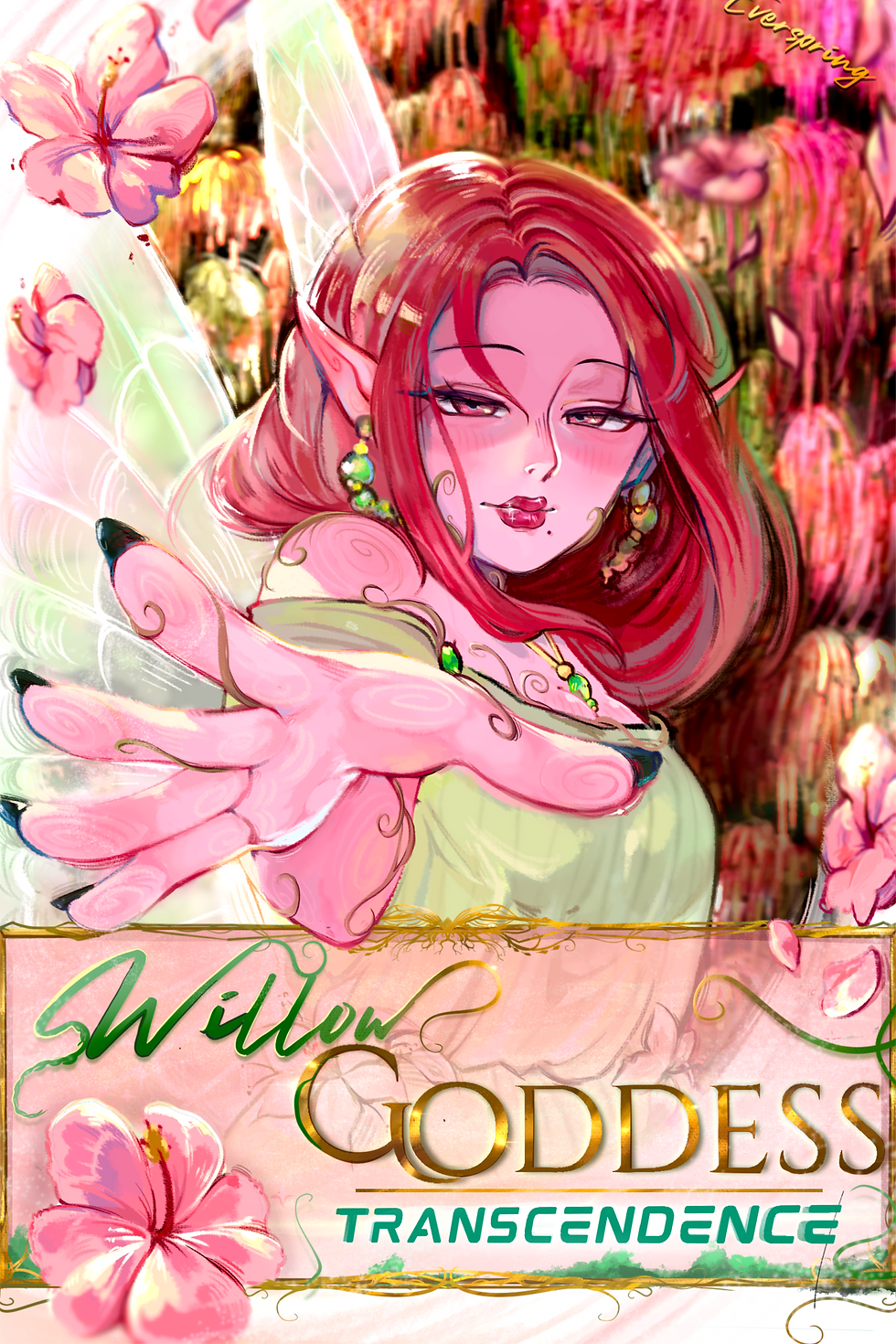
Enter: my strategy for my Light Novel, Willow Goddess: This gorgeous artwork was made for me by the incredibly talented Detective Nyanya.
Using her artwork, I then made the Typography using a mixture of Procreate and Canva. Now, I did use three different fonts but maybe you can forgive me for that.
Following my example, you can tell an artist what you are looking for and have them create an artwork. Just make sure you’re up front about what you’ll be using it for, because the pricing will probably change; and if you accidentally misrepresent the purpose, you could face liability. Additionally, some designers like myself will take a design you’ve already made at a reduced fee and create the typography for you. The pricing for custom illustrations will vary widely by the requested composition, especially for multiple characters. This also helps solve the issue of finding a cover designer that matches both the style of illustration you want and has excellent typography; and sometimes only one artist will do.
Lastly, you can license artworks directly from artists like when I mentioned my Shutterstock Contributor profile. If you happen to find an artwork that is everything you ever hoped for to use in your project, reach out and ask if they are interested in licensing the work to you. There’s a high chance that the average artist won’t know how it works, so you should have a prepared offer just in case.
Option 4: Hiring A Book Cover Designer
Out of ideas and resolved to save up the money to hire a ‘real’ designer?
You can start by considering me! Shameless plug, yes, but I have to advertise my service somehow.
Some things you might be wondering about hiring a designer for your ebook:
How much will hiring a cover designer cost?
Most designers don’t put even their starting prices on their websites. You have to request a quote. And for good reason. They don’t want someone who wants all the bells and whistles requesting work for the price of one photo they have to spend three hours looking for and basic typography simply because it is listed as the starting price in their portfolio. However, this leaves indie authors wondering: …well how much does a cover cost?
Every book cover artist is different.
You should always expect to pay more for illustrations (even basic ones), and less for photo composite books. A good way to gauge how difficult your request will be is to picture the composition you have in your head, and then search Google and free image websites for similar images. If you’re having trouble finding matches, it’s a sign that you’ll be paying more.
Beginner level artists will likely charge you between $50-$100 for an Ebook cover. These will be the artists giving you a product not too much better than what you could make yourself with a little more time and proper tools. If an artist is charging you less for a better product, it is either a unicorn or too good to be true.
Mid-level designers will charge between $100-$500, and industry standard professionals will scale up from there.
As a mid-tier designer, my prices personally start at $100 for Ebooks. I charge more for front, spine, and back. I also provide a $500 ‘anything’ bundle which comes with everything, including illustrations, infinite revisions, and wraps, and a copyright transfer to make it simple.
Most professional or mid-level artists (like me) will charge an additional fee to transfer the entire copyright, relinquishing their ownership entirely over the work. This can be between 50% and 100% of the total commission price - with some variation. If they don’t specify that the copyright goes to you upon payment, you’ll need to review their terms of service for your Licensing information. Book cover designers that do not do this are either extremely generous or do not know their rights. In the worst case scenario, they could be attempting to scam you with scary fine print clauses.
FAQs
Frequently asked questions for indie authors looking to hire a book cover designer.
Where do I find book cover artists?
Fiverr.com, Reedsy.com, Freelancer.com, Reddit, Facebook, other social media, and specifically their websites - that’s where you’ll get the best prices too.
What to expect when hiring a designer?
Terms of Service Agreement Completion - if they don’t have one, walk away!
Kill Fees (most professionals charge one if you cancel a project midway through)
Some professionals charge a non-refundable deposit that is functionally similar. Ones that don’t may be new to the industry and/or haven’t been burned by abandoned projects yet.
Whether they deliver a PSD file or a flattened image. Some designers will give you a version without the text for no additional cost, but typically not.
Merchandising Fees - unless the copyright is transferred to you, purchasing a $200 cover does not automatically give you the right to sell $4,000 worth of t-shirts featuring the designer’s work, so check your fine print!
Professionalism. I cannot stress this enough: proper book covers designers do not trip over themselves and bend over backwards to get an order from you. They are transparent about their process, payment methods, and their terms of service. From the outset, you will know when you pay, what you will pay, and how you will pay. Hard sales tactics are signs of scammers. Good designers want people to see their work and say ‘Wow. I need something like that!’
How not to get scammed buying a book cover: an overview
I’ll go more into this in a future post, but you generally should beware con artists looking to steal money from your pocket.
Unusual Fees: Paying up front isn’t unusual, but not knowing how much the work will cost is. Up charging should only happen when you make an additional request or get a revision done on something that was already locked in stone - and your designer will tell you that it will incur a fee before completing that revision.
Payment methods: you should look for designers that accept payment methods with consumer protection like PayPal. If you don’t get what you paid for, you can contact them for a refund. I do not advise using Venmo, Cashapp, or other informal methods of payment for hiring freelancers.
Clear Workflow: A good designer can tell you exactly what their process looks like. For example, most of my workflows look like this:
Free Consultation -> Customers pays Deposit (if applicable), agrees to TOS -> Thumbnail sketches or Proof of Concept -> Construction of Approved Concept -> Approval on Final Watermarked Product -> Customer Pays Invoice -> File Delivery.
High Quality Portfolio At A Low Price: It might seem obvious when I put it like this, but scammers often take another artist’s portfolio and, when they receive an order, deliver something little better than slop - or even AI! If you’re suspicious about a seller, you can reverse search pieces in their portfolio.
Still have questions? Have a project on your burner but not sure what direction to take? Reach out to me for a free consultation about your project!
This post is entirely unsponsored, so you if you find it useful I hope you will consider donating to my Ko-Fi.
Written by Art by Elandria 2026, author and graphic designer, all rights reserved. Do not repost in whole or in part this blog post without my consent.
(The information in this blog is not guaranteed to be a fully comprehensive understanding of United States Intellectual Property Law. The author is not a lawyer and does not claim to be one. It is recommended that you consult with a lawyer before agreeing to any Terms of Service related to your work as an author. Additionally, contracts you sign are not valid if they violate federal law. Note: Hiring a cover artist that does not transfer the copyright of that work to you does NOT mean they own YOUR IP such as the characters, it only means they have the rights to the book cover they made.)

Comments